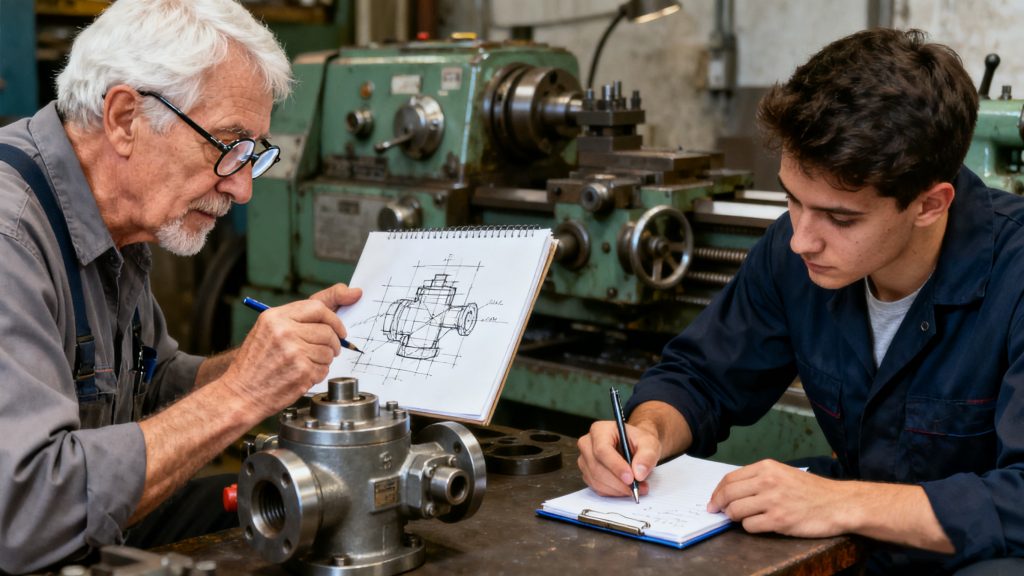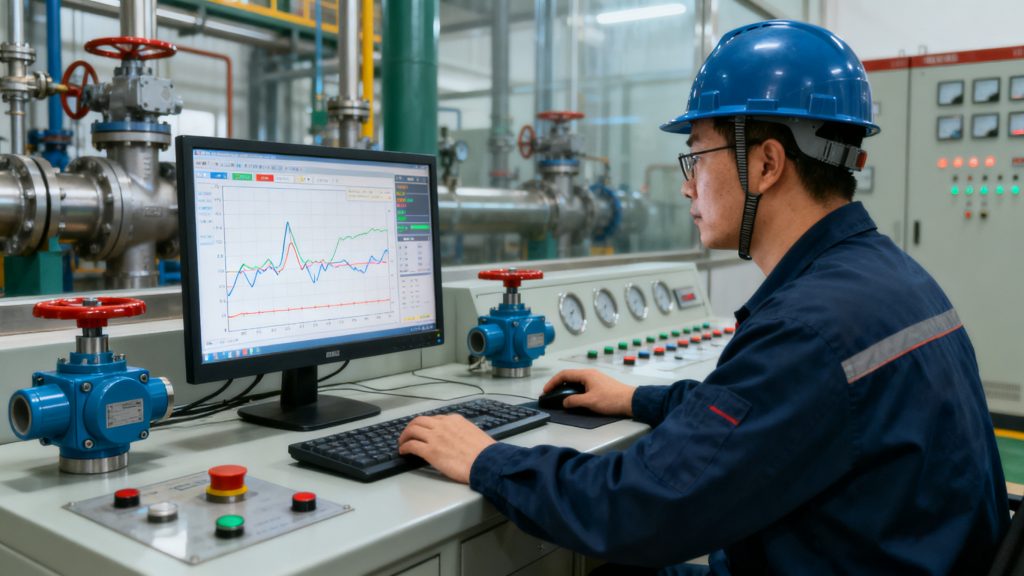
Choosing the right food grade valves for the food and beverage industry ensures safety, hygiene, and regulatory compliance across all production stages. Valves must meet FDA, 3-A Sanitary, and EHEDG standards. Certified sanitary valves reduce contamination risks and simplify cleaning with CIP and SIP processes. Stainless steel valves and proper seals like EPDM or FKM help maintain product quality and prevent corrosion.
1. Common Valve Types and Applications
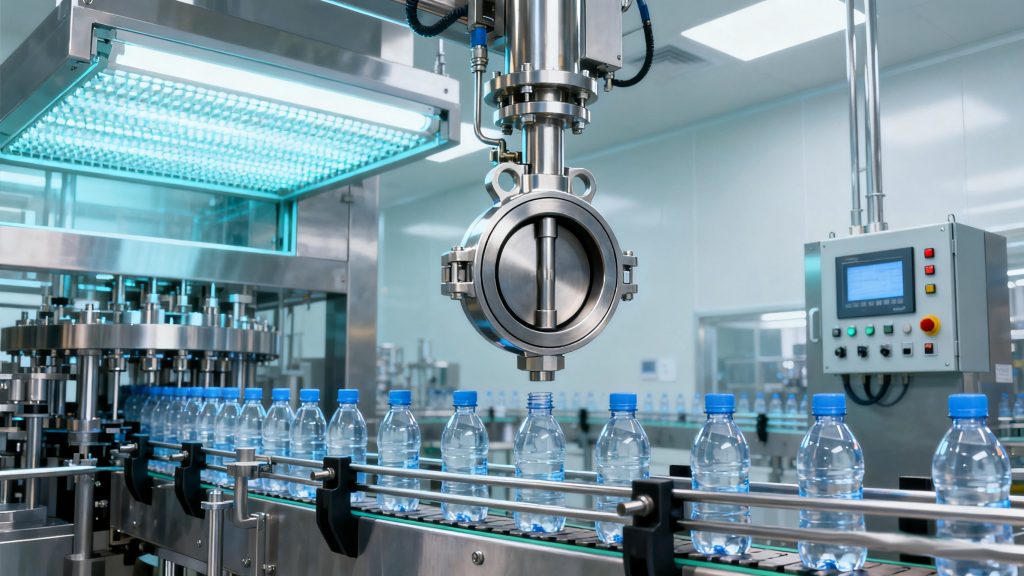
- Butterfly Valves: Widely used in the food and beverage industry for low-pressure liquids like water, juice, or soft drinks. They are easy to clean and maintain smooth flow, though not ideal for high-pressure processes.
- Ball Valves: Offer fast on/off control, suitable for carbonated beverages or beer bottling lines. Durable and resistant to high pressure, but less precise for flow adjustment.
- Diaphragm Valves: Designed for sterile processes in the food and beverage industry. The choice of diaphragm material affects resistance and hygiene levels. Learn more at diaphragm-valves.com. Compatible with CIP valves and SIP, though flow is slower than ball valves.
- Check Valves: Stop backflow in syrup, milk, or beer pipelines. They protect product quality but cannot control flow. Learn more about different types of check valves commonly used in food processing systems.
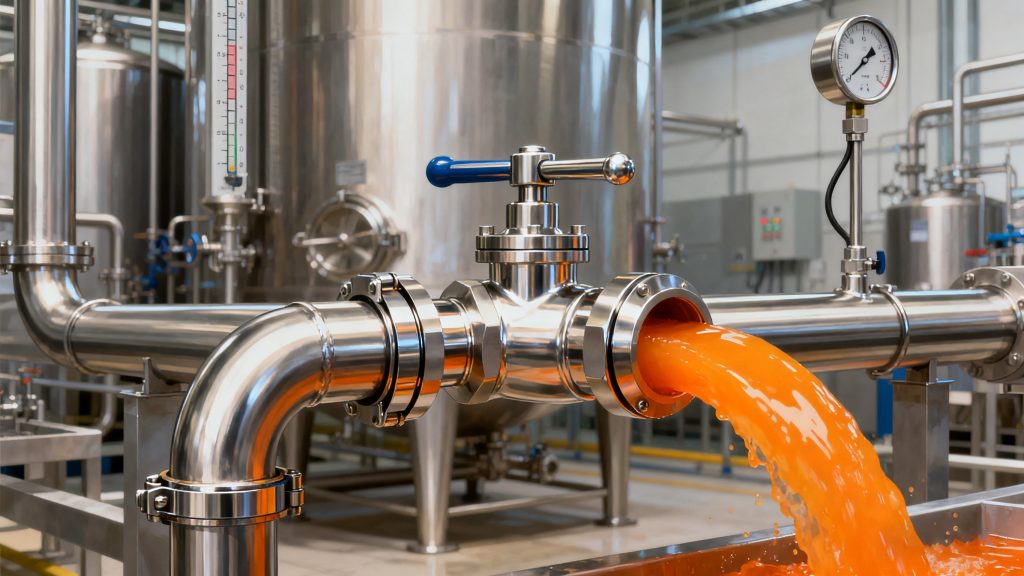
2.Matching Valves to Food Products
- Fruit Juices and Soft Drinks: Use butterfly valves or ball valves for smooth flow and fast shutoff. Ensure valves are CIP compatible for easy cleaning.
- Dairy Products: Diaphragm valves are ideal for milk, yogurt, and other sterile products due to their crevice-free design and hygienic construction.
- Carbonated Beverages: Ball valves withstand sudden pressure changes and prevent leaks during bottling or carbonation processes.
- High-Viscosity Products: Sauces, syrups, and jams require valves with large flow paths, such as stainless steel diaphragm valves, to prevent clogging.
- High-Pressure Processes: Pasteurization and sterilization require valves that can handle elevated temperatures and pressures without compromising hygiene, such as stainless steel ball valves.
Key Considerations:
- Match valve type to product viscosity, pressure, and temperature.
- Ensure material compatibility with food and beverage ingredients.
- Prioritize sanitary design to reduce contamination risks.
👉 See how these sanitary valve solutions are applied in real food and beverage production lines:
View Food & Beverage Industry Projects
3.Food Grade Valve Actuators and Options
- Manual Valves: Simple and low-cost, ideal for small production lines or labs. Easy to operate but requires human intervention.
- Pneumatic Valves: Fast and reliable, perfect for high-speed filling lines. Uses air pressure to operate automatically.
- Electric Valves: Provide precise control and can integrate with PLC/SCADA systems for automation. Good for complex processes where accuracy is important.
- Choosing the Right Actuation: Pick based on plant size, production speed, and level of automation needed to improve efficiency and reduce errors.
4.CIP and SIP Cleaning Compatibility
CIP valves let you clean without disassembling pipes or valves — a principle widely used in chemical and food process engineering, as discussed on AmmoniaKnowHow. They use safe cleaning liquids at the right temperature and flow to remove residue and germs. SIP uses steam to sterilize valves and pipes, making dairy, juice, and other drinks safe. Valves with smooth surfaces, no corners, and good drainage are easier to clean. Choosing CIP valves saves time, reduces contamination, and keeps operations safer.
5.Material and Hygienic Design for Food-Grade Valves
Most food and beverage valves use stainless steel 304 or 316, depending on the medium and required diaphragm material compatibility. 316 is better for acidic or salty products. Polished surfaces help stop germs from sticking and make cleaning easier. Seals like EPDM, FKM, or silicone must be food-safe. Valves should have no corners or hard-to-clean areas and use quick connections. Good material and simple hygienic design keep products safe, make cleaning easy, and extend valve life.
6.Pressure, Temperature, and Flow Control
Valves must match the system’s pressure, temperature, and flow. Globe and diaphragm valves give precise flow control, while ball and butterfly valves are good for quick on/off operation. Choosing low-resistance valves reduces pump energy use. Always check valve ratings to ensure they can handle your process conditions safely.
7.Seals and Gaskets
High-quality seals prevent leaks and keep products safe. Seals must handle CIP/SIP cleaning and meet FDA or EU food safety standards. Valves with quick-change gaskets make maintenance faster and reduce downtime. Using proper seals ensures hygiene and keeps operations running smoothly.
8.Automation and Monitoring
Automated valves with sensors let you control the process remotely. Connecting them to PLC/SCADA systems enables real-time monitoring, alerts for maintenance, and better process optimization. Automation helps reduce human errors and keeps production consistent and safe.
9.Common Mistakes and Selection Checklists
Common Mistakes:
- Ignoring hygienic design
- Mismatching valve type
- Overlooking CIP/SIP compatibility
- Focusing solely on initial cost
Selection Checklist:
- Hygienic design
- Material compatibility
- Valve type
- CIP/SIP readiness
- Pressure and temperature rating
- Actuation method
- Seals and gaskets
- Flow requirements
- Automation integration
- Total cost of ownership
Example of a Commonly Used Sanitary Valve in Food & Beverage Applications
After considering hygiene requirements, operating conditions, and automation needs, pneumatic clamp sanitary butterfly valves are commonly selected for food and beverage production lines that require reliable on/off control, CIP compatibility, and easy maintenance.
These valves are widely applied in beverage filling systems, dairy processing lines, and CIP circuits due to their hygienic clamp connections, fast pneumatic actuation, and smooth, precise flow control. Many designs, such as the WANVALVE WP12-K, are manufactured from 304 stainless steel for corrosion resistance and feature optional manual override via pull or trigger handles, allowing operators to easily open, close, or adjust the flow as needed while maintaining hygienic conditions.
👉 View Pneumatic Clamp Sanitary Butterfly Valve WANVALVE WP12-K
Conclusion
Selecting the right sanitary valve ensures hygiene, efficiency, and compliance. Focus on the material, design, actuation, cleaning compatibility, and automation of food-grade valves to ensure safety and efficiency. Proper selection reduces contamination, downtime, and long-term costs.
Explore More Sanitary Valve Options
To explore all available configurations, including pneumatic, electric, and manual actuation valves, visit our Valves Collection for detailed specifications and material choices.
If you have a specific application or special requirement, feel free to contact us – our engineers can help recommend the most suitable valve solution for your process.