Choosing between a pneumatic actuated valve and an electric actuated valve isn’t about deciding which technology is better—it’s about selecting the right solution for your application. Factors such as operating conditions, control requirements, available power sources, maintenance, and budget all influence the best choice.
In general, a pneumatic actuated valve is ideal for fast operation, high-cycle service, and hazardous environments, while an electric actuated valve is better suited for precise control, intelligent automation, and applications without a compressed air supply. This guide compares their working principles, performance, costs, advantages, and typical applications to help you choose the right valve actuator with confidence.
Pneumatic vs Electric Actuated Valve Comparison
When comparing a pneumatic vs electric valve, the best choice depends on more than actuator type alone. Factors such as power availability, operating speed, control accuracy, installation conditions, and long-term maintenance requirements all influence the final selection.
| Comparison Factor | Pneumatic Actuator | Electric Actuator |
|---|---|---|
| Power Source | Compressed air supply | Electric power supply |
| Operating Principle | Uses air pressure to generate linear or rotary motion | Uses an electric motor to drive valve movement |
| Response Speed | Faster operation, especially for frequent on/off cycles | Generally slower but suitable for controlled operation |
| Positioning Accuracy | Suitable for basic control applications | Higher accuracy for precise positioning and modulation |
| Output Torque | Provides high torque with compact design | Available in various torque ranges depending on motor size |
| Installation Requirements | Requires air compressor, tubing, and air preparation equipment | Requires electrical wiring and suitable power supply |
| Maintenance Requirements | Requires inspection of air supply components and pneumatic parts | Generally requires less routine maintenance |
| Initial Investment | Usually lower actuator cost but may require air system investment | Higher initial cost in many applications |
| Operating Cost | May increase due to compressed air consumption | Lower energy loss in systems without continuous air supply |
| Safety in Hazardous Areas | Excellent when properly configured for hazardous environments | Requires special certifications for hazardous locations |
| Environmental Suitability | Performs well in harsh industrial conditions | Suitable for clean, controlled, and automation-focused environments |
| Typical Applications | Oil & gas, chemical processing, power plants, water treatment | HVAC, building automation, food processing, pharmaceutical systems |
Selecting the right actuator requires evaluating the complete operating environment rather than focusing on a single specification. A proper valve actuator selection process should consider available utilities, required control performance, operating frequency, safety requirements, and future maintenance plans. Understanding these factors helps buyers choose an actuator solution that delivers reliable performance throughout the equipment lifecycle.
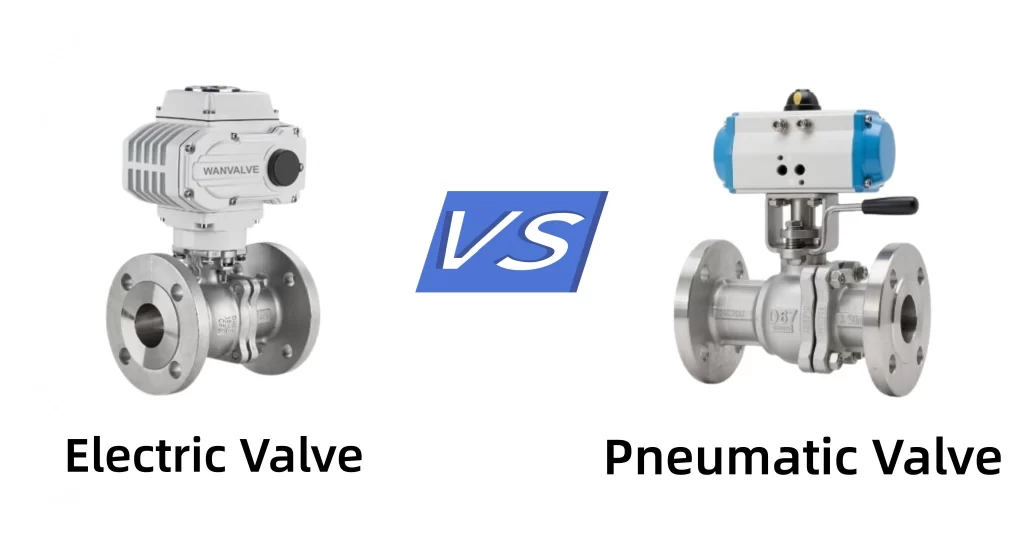
How Valve Operation Differs Between Pneumatic and Electric Actuators
The main difference between pneumatic and electric actuators lies in how they convert energy into mechanical movement. A pneumatic system uses compressed air as the driving force, while an electric system relies on a motor to generate rotational motion. This difference directly affects response speed, control capability, installation requirements, and overall system design.
How a Pneumatic Actuated Valve Works
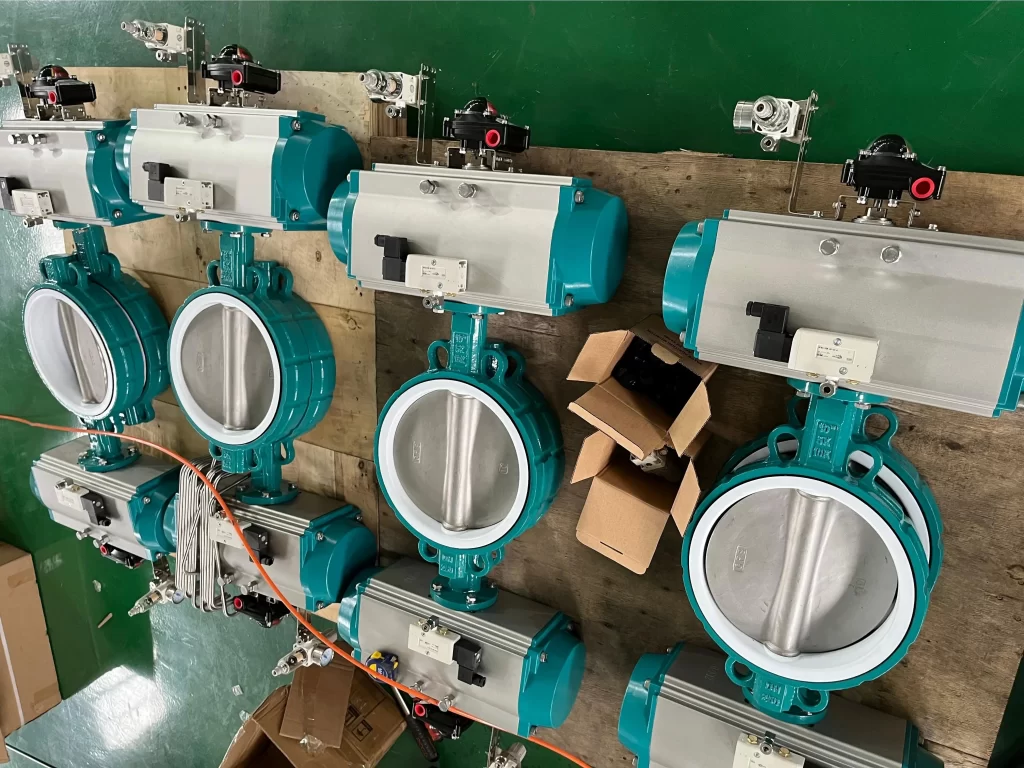
A pneumatic actuated valve operates by using compressed air to move a piston or diaphragm inside the actuator. When air pressure is supplied to the actuator chamber, it creates mechanical force that rotates or moves the valve stem, allowing the valve to open, close, or regulate flow.
A typical pneumatic actuator system includes an actuator, solenoid valve, air supply unit, and control accessories. Because compressed air can deliver high force quickly, pneumatic systems are widely used in applications that require rapid valve cycling, reliable shut-off, and consistent performance in demanding industrial environments.
How an Electric Actuated Valve Works
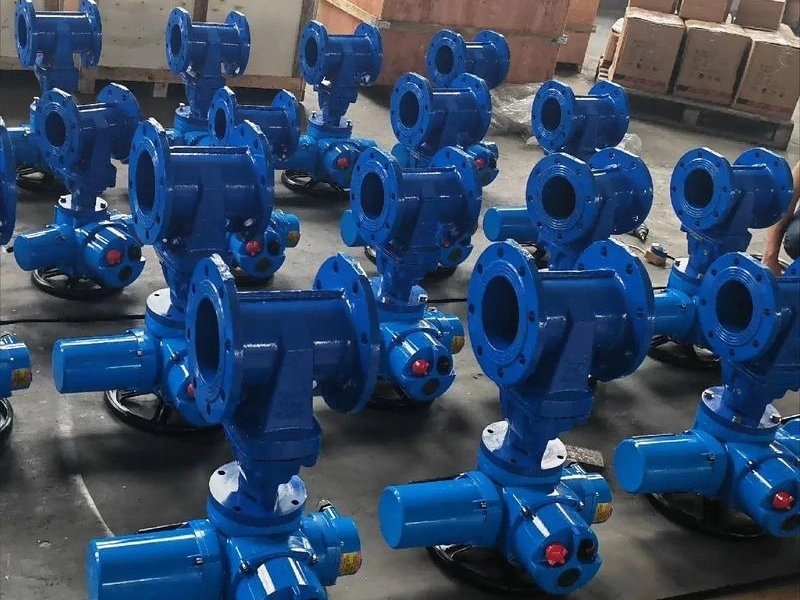
An electric actuated valve uses an electric motor to produce the torque required to operate the valve. The motor receives electrical signals from a control system and converts electrical energy into mechanical movement, allowing the valve position to be adjusted according to operating requirements.
Electric systems are often preferred when accurate positioning, automated control, and remote operation are important. They can be easily integrated with PLC systems, industrial networks, and intelligent control platforms, making them suitable for applications that require precise flow regulation and advanced automation. PLC systems are widely used in industrial automation to monitor inputs, process control logic, and manage outputs connected to equipment such as valves and actuators.
What Are the Advantages and Disadvantages of Each Actuator?
Both pneumatic and electric actuators have their own strengths, and the best choice depends on application requirements. Buyers should consider operating conditions, control needs, safety requirements, and long-term maintenance costs before making a decision.
Pneumatic Actuator
Advantages
Fast Operation and High Response Speed
- Provides rapid valve movement through compressed air.
- Ideal for frequent cycling, emergency shut-off, and fast process control applications.
- Suitable for systems requiring quick open and close actions.
Reliable Performance in Harsh Environments
- Simple mechanical structure with fewer electrical components.
- Performs well in demanding industrial conditions.
- Suitable for hazardous areas when properly configured.
High Torque Output
- Delivers high torque in a compact design.
- Suitable for quarter-turn valves such as ball valves and butterfly valves.
- Provides reliable operation for large valve sizes.
Disadvantages
Requires Compressed Air Infrastructure
- Requires air compressors, pipelines, and air preparation equipment.
- Additional installation costs may occur if no existing air system is available.
Lower Positioning Accuracy
- Provides less precise positioning compared with electric solutions.
- Not ideal for applications requiring continuous and highly accurate modulation.
Requires Pneumatic System Maintenance
- Air quality and pressure stability must be monitored.
- Pneumatic accessories such as filters and solenoid valves require regular inspection.
Electric Actuator
Advantages
High Positioning Accuracy
- Provides precise valve positioning and control.
- Suitable for applications requiring accurate flow regulation.
Easy Automation Integration
- Can be connected with PLC systems and industrial control networks.
- Supports remote operation and intelligent automation.
No Compressed Air Required
- Does not require compressors or air piping systems.
- Easier installation in facilities without existing air infrastructure.
Disadvantages
Higher Initial Investment
- Usually has a higher purchase cost compared with standard pneumatic solutions.
- Additional control features may increase overall investment.
Slower Response for Frequent Cycling
- Motor-driven operation is generally slower than pneumatic systems.
- Less suitable for extremely fast switching applications.
Requires Special Protection in Hazardous Areas
- Standard electric actuators are not suitable for explosive environments.
- Explosion-proof certifications and protection designs are required.
When Should You Choose a Pneumatic or Electric Actuated Valve?
The right actuator choice depends on the actual requirements of your system rather than a simple comparison of specifications. Different industries, operating environments, and control requirements may lead to completely different decisions. A solution that works well in one application may not be the most efficient choice in another.
Best Applications for Pneumatic Actuators
A pneumatic solution is often the preferred option when fast response, reliable switching, and high operating frequency are required. Because compressed air can generate powerful and rapid movement, it is widely used in industrial processes where valves need to open and close quickly or perform frequent cycling.
Pneumatic actuators are also a common choice for hazardous environments, especially in industries such as oil and gas, chemical processing, and power generation. When properly configured, they can provide reliable operation without relying on electrical components at the actuator site. For facilities that already have a compressed air system, pneumatic solutions can also offer a practical and cost-effective option.
Best Applications for Electric Actuators
An electric solution is usually more suitable when precise positioning, advanced automation, or remote control is a priority. Since electric actuators can receive digital signals and integrate easily with modern control systems, they are commonly selected for applications that require accurate valve adjustment rather than simple open-close operation.
Electric actuators are also a good choice for locations where compressed air is unavailable or where installing an air supply system would be impractical. Industries such as HVAC, food and beverage, pharmaceutical processing, and building automation often benefit from their simple installation and intelligent control capabilities.
Ultimately, selecting between pneumatic and electric options requires balancing performance requirements, installation conditions, safety considerations, and long-term operating costs. Understanding how each technology fits your application is the key to making the right valve actuator selection.
Which Actuator Is More Cost-Effective?
When evaluating cost, the lowest initial purchase price does not always represent the most economical solution. The total cost of an actuator depends on installation requirements, energy consumption, maintenance needs, and expected service life. A lower-cost option at the beginning may require additional investment over time, while a higher initial investment may provide better efficiency and reliability in the long run.
| Cost Factor | Pneumatic Actuator | Electric Actuator |
|---|---|---|
| Initial Equipment Cost | Generally lower actuator cost, but additional air system components may be required | Usually higher initial investment due to motor and control components |
| Installation Cost | May increase if compressors, air piping, and treatment systems are needed | Generally simpler installation where electrical power is available |
| Energy Consumption | Compressed air generation can contribute to higher operating costs | Typically lower energy consumption for applications without continuous air supply |
| Maintenance Cost | Requires maintenance of air supply systems and pneumatic accessories | Usually requires less routine maintenance |
| Long-Term Operating Cost | Cost-effective for existing compressed air systems and high-cycle applications | More economical for precise control and locations without air infrastructure |
For many industrial buyers, the most cost-effective choice depends on the existing facility conditions. A plant that already has a reliable compressed air system may find pneumatic solutions more economical, especially for frequent switching applications. However, facilities focused on automation, precise control, or reduced maintenance requirements may benefit more from electric solutions over the equipment lifecycle.
A proper valve actuator selection process should consider both upfront investment and long-term operating expenses. Looking beyond the initial price helps ensure the selected actuator delivers better reliability, efficiency, and overall value.
Which One Should You Choose?
There is no universal answer when choosing between pneumatic and electric actuators. The right option depends on your operating environment, control requirements, available utilities, and long-term maintenance expectations. Instead of choosing based only on purchase price or technical specifications, buyers should focus on which solution can provide the best performance and reliability for their specific application.
Choose a pneumatic actuator if your project requires fast operation, frequent valve cycling, high torque output, or reliable performance in demanding industrial environments. Pneumatic solutions are especially suitable for facilities that already have compressed air systems or applications where safety is a major concern, such as oil and gas, chemical processing, and other hazardous areas. Hazardous areas are classified according to the potential presence of flammable gases, vapors, or combustible dust. Proper equipment selection and protection methods are essential to ensure safe operation in these environments.
Choose an electric actuator if your application requires precise positioning, advanced automation, remote monitoring, or simplified installation. Electric solutions are often the better choice for systems without compressed air availability or projects where accurate control and lower routine maintenance are more important than extremely fast response.
For a successful valve actuator selection, consider the complete operating conditions rather than focusing on a single factor. By evaluating power sources, control needs, environmental conditions, and lifecycle costs together, you can select the actuator solution that delivers the best balance of performance, efficiency, and reliability.
Frequently Asked Questions
Which actuator is more reliable?
Both pneumatic and electric actuators can provide reliable performance when correctly selected and installed. Pneumatic actuators are known for their simple structure, fast response, and durability in demanding industrial environments. Electric actuators offer reliable operation with precise control and easier integration into automated systems. The better choice depends on the application requirements, operating conditions, and maintenance capabilities.
Which actuator lasts longer?
The service life of an actuator depends on operating conditions, maintenance, and usage frequency rather than actuator type alone. Pneumatic actuators can achieve long service life in high-cycle applications when the air supply is properly maintained. Electric actuators can also provide extended operation with less routine maintenance when used in suitable environments.
Are pneumatic actuators cheaper than electric actuators?
In many cases, pneumatic actuators have a lower initial purchase cost. However, the overall cost depends on the complete system, including installation, energy consumption, and maintenance requirements. If a facility already has a compressed air system, pneumatic solutions can be highly cost-effective. For applications requiring precise control or reduced maintenance, electric options may provide better long-term value.
Can a pneumatic actuator replace an electric actuator?
A pneumatic actuator can replace an electric actuator in some applications, but the decision depends on factors such as available power sources, control requirements, and operating conditions. The replacement is not always a direct swap because the control system, installation requirements, and automation setup may also need to be adjusted.
Which actuator is better for hazardous environments?
Pneumatic actuators are often preferred for hazardous environments because they do not rely on electrical components at the actuator location and can operate safely when properly configured. Electric actuators can also be used in hazardous areas when equipped with suitable explosion-proof certifications and protection designs.
Which actuator requires less maintenance?
Electric actuators generally require less routine maintenance because they do not depend on compressed air systems, filters, or pneumatic accessories. However, maintenance requirements also depend on operating conditions, installation quality, and application demands. A properly maintained pneumatic system can also provide excellent long-term reliability.
Which actuator is more energy efficient?
Energy efficiency depends on how the system is operated. Electric actuators typically consume energy only during movement, while pneumatic systems may continuously consume energy through compressed air generation and management. However, for high-speed cycling applications, pneumatic actuators may still provide better overall efficiency due to their fast response and reliability.
Conclusion
Choosing between a pneumatic vs electric valve solution depends on your specific application requirements rather than a simple comparison of which technology is better. Pneumatic actuators are often the preferred choice for fast operation, high-cycle applications, and demanding industrial environments, while electric actuators are better suited for precise control, automation integration, and installations without compressed air availability.
Before making a final decision, buyers should consider key factors including operating conditions, control requirements, budget, maintenance capabilities, and safety considerations. A well-matched actuator not only improves valve performance but also helps reduce long-term operating costs and maintenance challenges.
If you are unsure which actuator solution is right for your project, our engineering team can help you evaluate your application requirements and recommend a suitable valve configuration based on performance, reliability, and cost-effectiveness.
Get Expert Valve Selection Support
Not sure which actuator is right for your application? Explore our Pneumatic Actuated Valve and Electric Actuated Valve solutions to learn more about their features and applications, or contact our engineers for expert selection guidance and a customized quote.